Old House Plumbing in Mitchelton
Old house plumbing in Mitchelton usually means three eras of pipe and fittings layered over each other: pre-war timber homes, postwar fibro and brick-veneer cottages, and newer infill. Each era left its own materials behind, and each one fails in its own way. Our licensed plumbers work across Mitchelton and the suburbs beside it, and we read the house before we touch a tool.
If we're late, $100 comes off your bill

- Licensed and InsuredEvery job done by a licensed plumber. QBCC No: 15024607
- Fixed Quote FirstFlat-rate pricing, agreed before any work starts
- Lifetime Labour WarrantyBacked by our Fix-It-or-It's-Free guarantee (T&Cs apply)
- $0 Call-Out FeesNo extra charge for nights, weekends or public holidays
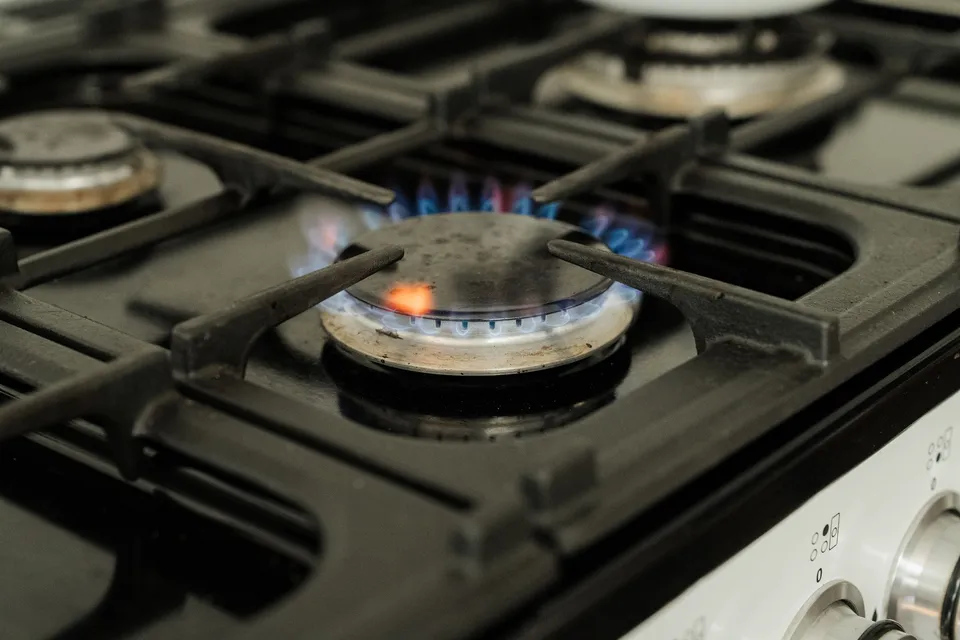
Pipes Under the Floor of a Timber Home
In a stump-mounted house, the water, waste and gas lines mostly run through the open subfloor where you can see them from below. A slab home buries most of its run in the slab or inside the walls, so reaching a fault means opening something up. That difference decides how a problem shows itself and how we get to it.
Signs that appear without opening anything include:
- wet or soft ground beneath a pipe run
- drips at joints under the floor
- rust marks on pipes and fittings
- damp or stained timber around the stumps
- a musty smell in the under-house space
A raised home gives us a straight look at the whole run, which is one of the few gifts an old house offers. Slab homes make us work from the symptoms instead, and the leak detection page explains how we narrow the source down.
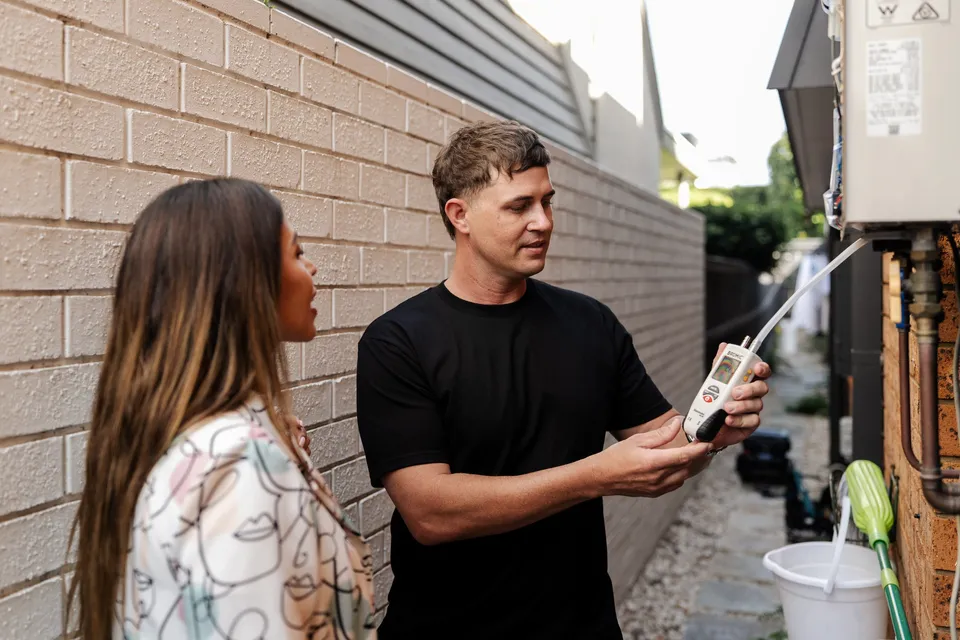
Rusty Water and Weak Flow in an Old House
Galvanised pipe is zinc-coated steel, and once that coating thins, rust takes hold inside the pipe wall and shows up at the tap. The three usual signs are discoloured water, poor flow at more than one outlet, and leaks that return along the same stretch after each patch. None of those signs means the whole house is failing; a plumber confirms the material and condition on site.
One date worth knowing: solder containing lead was still common on copper pipe and brass fittings until 1989, so the age of the water service matters in a pre-war or postwar home. When the pipe run from the meter to the house needs replacing, that job has its own page on repiping old pipes.

What a Renovation Sets Off in an Older Home
Most plumbing in a reno of an established home is notifiable work. A licensed plumber carries it out without a council permit and registers it with the QBCC as a Form 4 once the job is finished. The Regulation counts a building as existing when drainage and a water supply are both present, which covers nearly every older home.
The exceptions and triggers to know:
Permit work
where the building connects to a combined drain or runs on a dual reticulated supply, the plumber applies to council before starting.
Temperature control device
every new or replacement water heater needs one, keeping tap water at 50°C or below; a new hygiene fixture such as a shower triggers one too, while a washer swap does not.
Asbestos
most houses built before 1990 contain some, so renovating one takes extra precautions and can add to the job.
Old permits
a permit stays with the premises, binding the owner, any later owner and any occupier.
The QBCC's register lets you search an address for notifiable work done before, so the paper trail of a previous reno is findable.
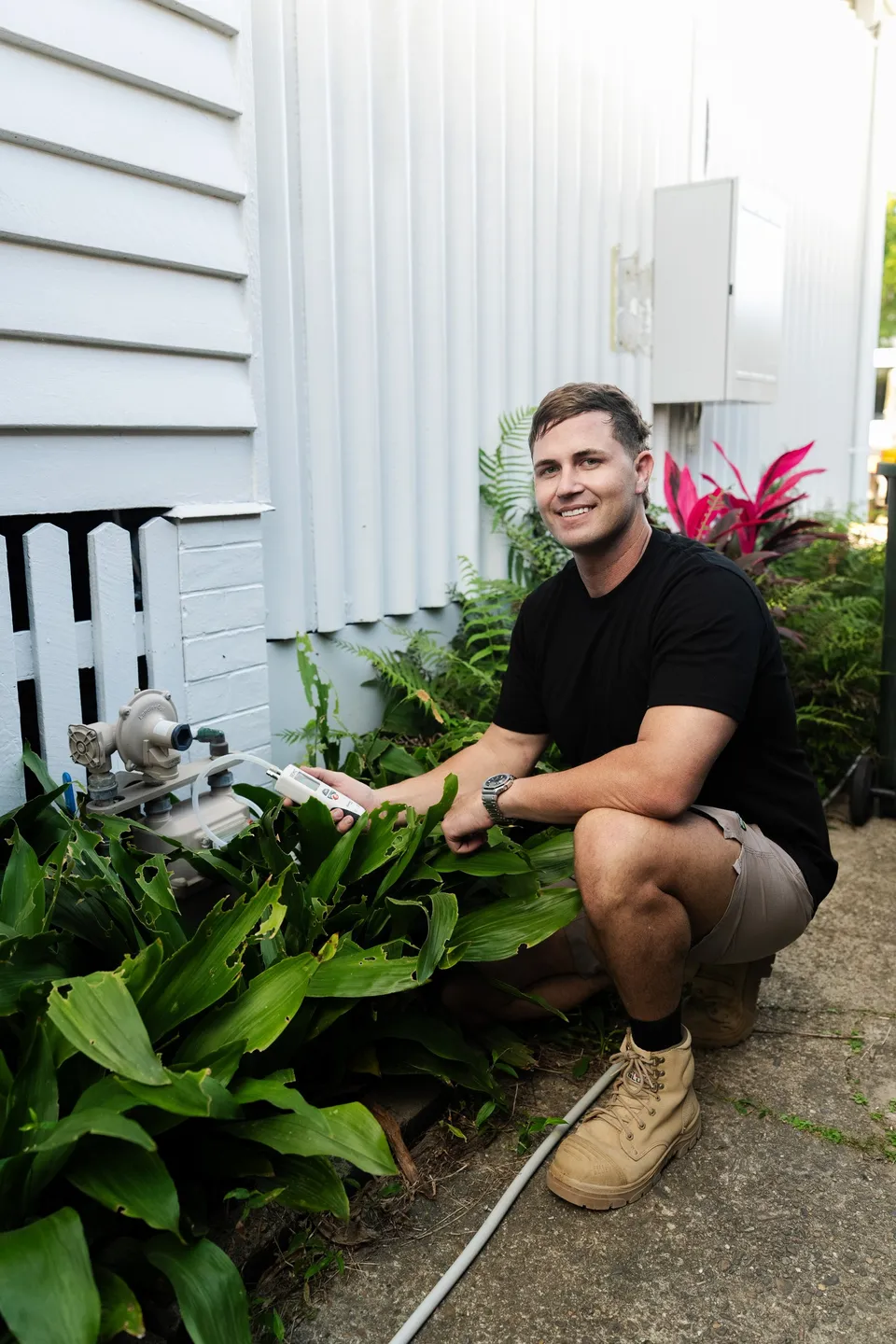
Corrosion and Wear in Older Gas Pipework
Gas work belongs to a licensed gasfitter alone, covering installing, altering, repairing, servicing, testing and certifying a gas system and its pipework and connections. The Queensland Government advises owners to watch older installations for rust, wear or damage, and to keep combustible materials clear of appliances. A gasfitter who spots a safety concern on a system has to give the owner a defect notice, unless the fault is fixed on the spot.
If you smell gas, switch the appliance off, air the rooms, leave every electrical switch alone, and shut the gas at the meter or bottle if the smell lingers. Call 000 if it persists. The paperwork side of gas work sits on our gas compliance certificates page.
Three Eras on the One Map
Mitchelton grew between Kedron Brook and the Enoggera military land, and its housing still shows the layers: weatherboard Queenslanders and fibro cottages from the early decades, then brick-veneer and units from later waves. Our Lady of Dolours School on Willcocks Street opened in January 1949, in the middle of the postwar cottage boom, and plenty of homes from that same era are still standing with their original fittings.
For an owner, that mix means the pipe material, the subfloor access and the paperwork rules can change from one street to the next. The Plumbing and Drainage Act asks every owner to take reasonable steps to keep the pipes and drains at their premises sound and working, and age makes that a live question.
How a Visit Runs
- 1

Call or message us
Ring (07) 3523 6484 or use the form and describe what's going on in Mitchelton. A few details up front mean the right gear comes on the first trip.
- 2

Under-floor and wall checks
We inspect the subfloor runs, the meter-to-house supply and any suspect fittings, and note the pipe material and its condition as we go.
- 3

Fixed quote, then the work
We give you a fixed quote before any work starts. It's flat-rate pricing with no hidden fees, and we only start once you approve it.
- 4

Settle up your way
Card and EFTPOS payment on site when the job's finished, or Fix now, pay later if that suits you better.
Plumbing job in Mitchelton?
$0 call-out fees, available 24/7, and same-day where we can.
Older House Plumbing Questions
Call (07) 3523 6484What is different about plumbing in an older Mitchelton home?
The pipe material and its condition set the job. Raised timber homes carry supply, waste and gas lines through the subfloor where age shows, postwar cottages often hold older fittings and tanks, and a renovation adds the Form 4 rules. A licensed plumber confirms what your house actually has on site.
How do I check the plumbing in an old house?
Start with what shows: damp patches, wet soil, stains, rust on pipes and fittings, brown water, poor flow and drips under the floor. A licensed plumber checks the rest, and our leak detection page covers the meter test with everything in the house switched off.
Why is the water rusty in my older Mitchelton home?
Brown or rusty water is the classic sign of galvanised steel corroding internally, though a plumber confirms the cause on site because other faults can discolour water too. Our repiping page covers replacing the old supply pipe from the meter.
Does renovating my Mitchelton home need a plumbing permit?
No, most plumbing in an existing building is notifiable work, done by a licensed plumber and lodged as a Form 4 with the QBCC. A permit applies only where the house sits on a combined drain or has a dual reticulated supply.
Can I find out what plumbing work was done before?
Yes, you can search your address on the QBCC's register of notifiable work and ask for a copy of any Form 4 for the property. A permit from earlier work stays with the premises and binds the current owner.

Call Us About an Older HouseWe'll call you back.
Phone (07) 3523 6484 for a licensed plumber in Mitchelton. We work under QBCC No: 15024607, with flat-rate pricing, no hidden fees and same-day where we can.
To claim your $0 call-out fee, call (07) 3523 6484 today.